Be Better Everyday
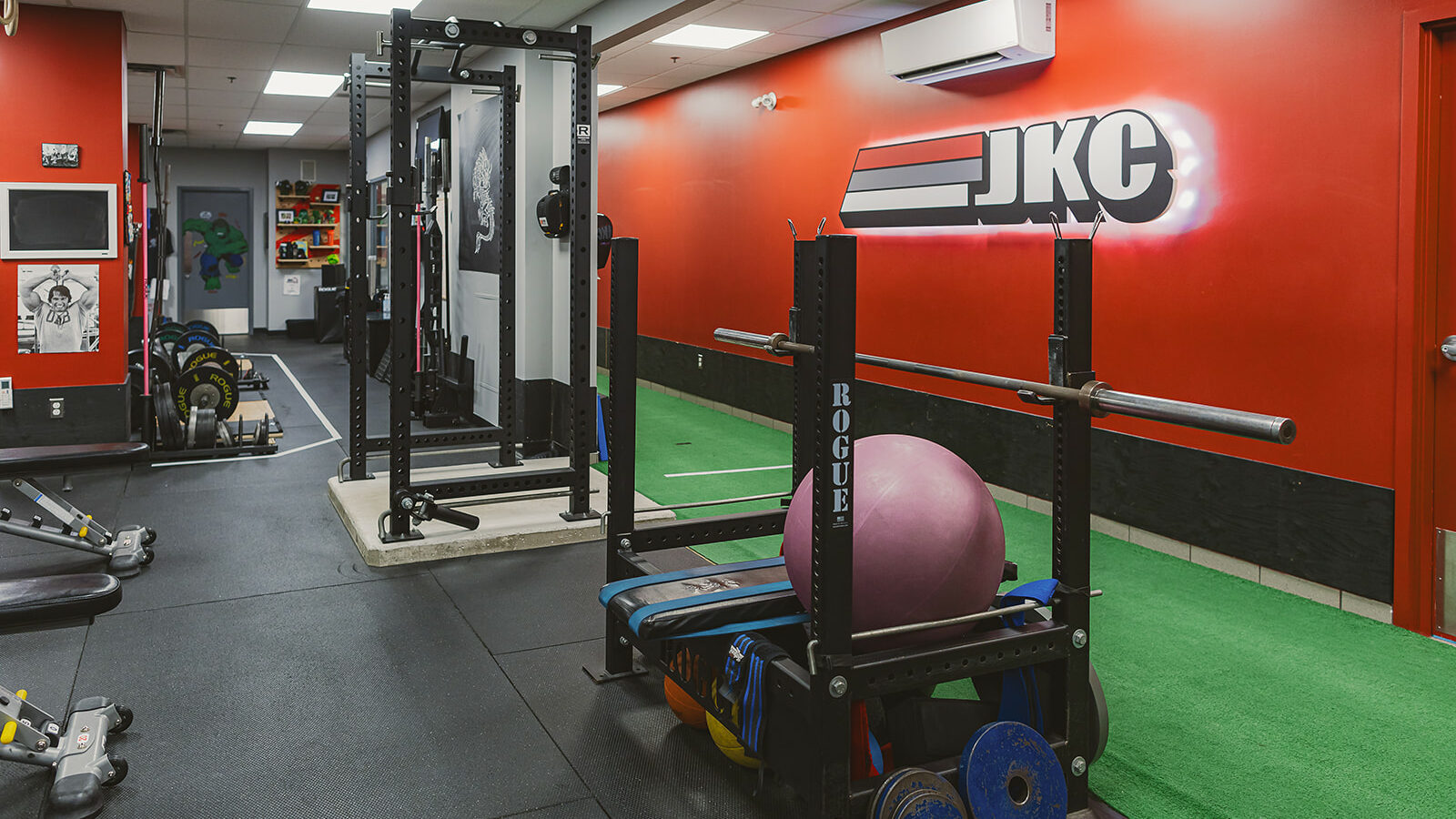
JKConditioning is a private fitness community located in the centre of St. John’s, Newfoundland. We offer personal training for busy people who want to improve their overall health and fitness. Personalized training sessions take place in a group setting under the guidance of our credible and reputable trainers. This means that you get the results of a personal training program with the support and camaraderie of our close-knit fitness community. We design workouts to make you better, not to see how much you can sweat.

































Custom Workouts in a Group Environment
Get the best of both worlds: a custom plan tailored to your needs and current ability along with the support from the JKC fitness community.
We Offer Flexible Scheduling
No locked-in days or times here. Train when’s convenient for you so you don’t have to miss workouts.
Pay As You Go
Enjoy a different fitness experience. Pay for training on your terms with no long-term membership fees. Out of town? No worries. Only pay when you workout.
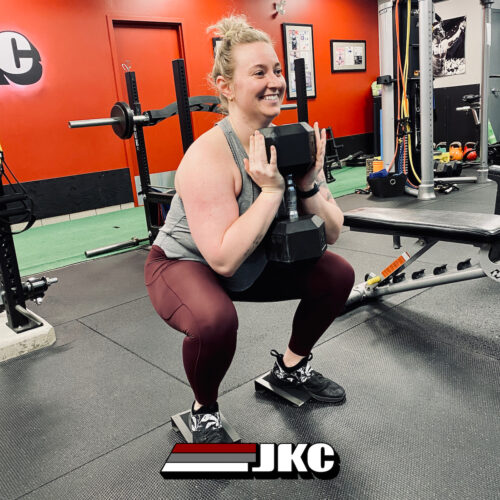
I’m 30 — started at JKC Aug 2016. I moved to NL to open lululemon and we chose Jon as one of our store’s ambassadors, did one workout and have raved about it ever since! The JKC team can adapt a workout no matter what the situation — injuries, new goals, you name it! The trust and expertise can’t be matched!
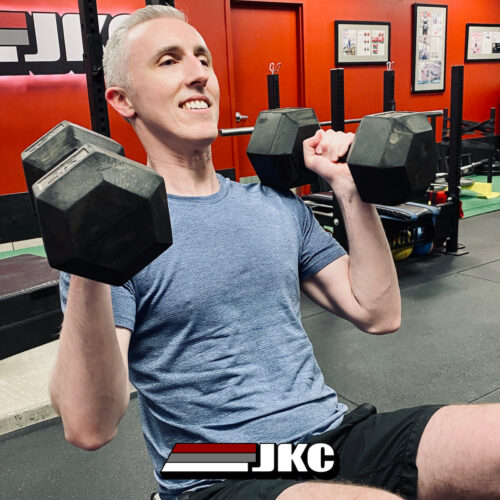
I recently turned 40, and I have been training at JKC since the summer of 2020. My partner Michael had already been training at JKC, so it came highly recommended. We had set up a home gym at the start of the pandemic, but needed to mix it up after the first lockdown. JKC differs from other gyms because of the personalized workouts. Jon, Thomas and Craig are great at challenging me to do more than I would on my own.
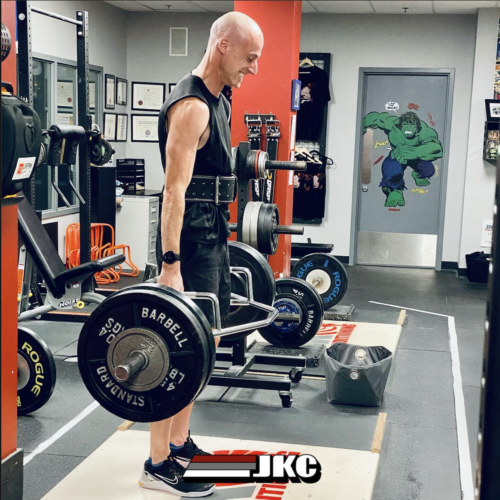
Two years ago I started training with JKC with the hopes of becoming a better runner, and today, I am running faster and stronger than I ever thought possible. Jon and Thomas provide a non-judgmental and professional coaching approach, and tailor their services to your individual needs. They use their expertise and knowledge to challenge me, and I am seeing real results. I look forward to many more years with JKC.
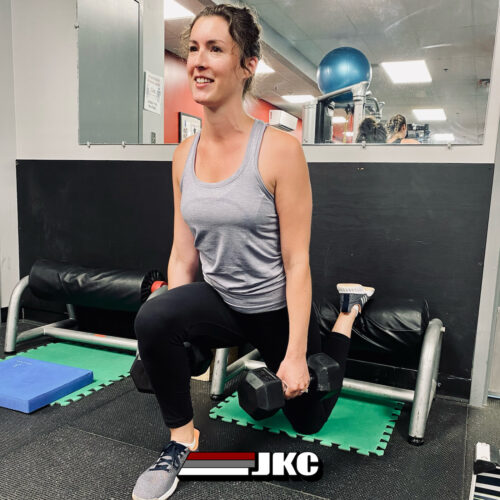
A few years ago, I pinched a nerve in my neck which led me to be stationary as any form of movement would cause extreme pain. During this time, my fiancé (Sean) started at JKC and loved it!! Once I overcame the nerve issue, Sean spent a long time trying to convince me that JKC is exactly what I needed to safely start working out again (I’m slightly stubborn and was super scared of re-pinching the nerve). Long story short, Sean was right… as much as I hate to admit it!
I never had luck at gyms, if it started to hurt I would call it a day. At JKC that is not an option, as Jon & Thomas will push you to finish the workout, whether you want to or not! Working out in a group setting is also a big benefit of working out at JKC, if you’re not feeling motivated you can simply feed off of someone else’s energetic vibes.
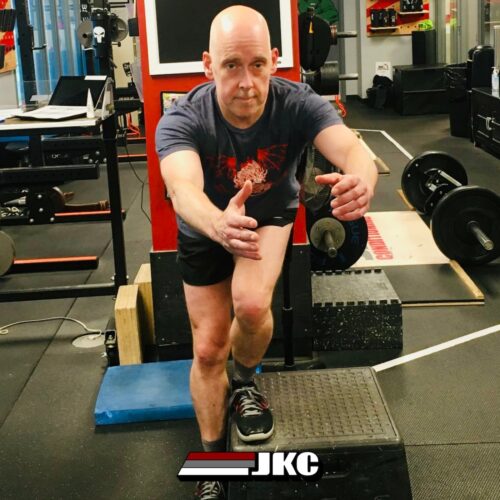
My original reason for joining JKC was to get some sage advice to help with my running. I had been looking for awhile, came across Jon, met for an assessment, and was quite happy with how that all went. Apart from the running specific strengthening and conditioning approaches, JKC is different from other gyms as I am a fan of the small group sessions where everyone has their own goals and individualized programs. As well, the run coaching is super. All the coaches go the extra mile to make sure you get the best out each training session. They are fantastic motivators! My favourite memory is deadlifting 330lbs. Making a lot of great friends and meeting some really cool people is pretty high up on that list, too.
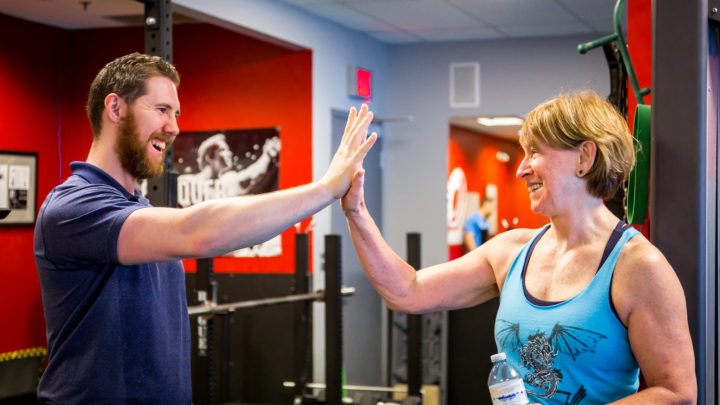
Personal Strength Training
Our goal is to transform your life through the avenue of health and fitness. New to strength training? Been lifting for years but in a rut? We got you covered.